The Difficulty With Finding a Country to Perform Assisted Suicide
Executive Summary
- Assisted suicide is a very difficult thing to perform in any country.
Introduction
It is nearly impossible to find a country where one can engage in assisted suicide.
Countries Where Assisted Suicide is Legal
Most of the ten countries that allow some type of assisted suicide (Colombia, Spain, Canada, Australia, Netherlands, Ecuador, Belgium, Portugal, New Zealand, and Luxembourg) only allow it in extreme circumstances.
When first looking into this topic, it appears that many more countries allow assisted suicide than actually do. And secondly, nearly all countries require a terminal illness and a lot of bureaucracy essentially before allowing assisted suicide. And also, it turns out that extremely few people go through with the assisted suicide at least through the normal legal means.
Example #1: Assisted Suicide in Spain
See these requirements for assisted suicide from Spain from the following article.
With its approval, Spain became the sixth state in the world to recognize nationwide the right to euthanasia. Between June 2021 and December 2022, there have been an estimated 370 cases of euthanasia deaths.
Example #2: Assisted Suicide in Belgium
Belgium is considered to have the most liberal laws on assisted suicide; look at all of the restrictions for AS in Belgium laid out in this article.
Belgium is one of the very few countries where euthanasia for unbearable mental suffering caused by a psychiatric disorder is allowed. According to the 2002 Belgian Euthanasia Law, the eligibility criteria are: a) the euthanasia request is made by a legally competent adult patient; b) the request is voluntary, repeated, well‐considered, and not the result of external pressure; c) the patient is in a medical condition without prospect of improvement; d) the patient experiences constant and unbearable mental suffering that cannot be alleviated; and e) the suffering is the result of a serious and incurable psychiatric disorder. To assess the fulfilment of these criteria, the attending physician must consult two independent physicians, including a psychiatrist. At least one month should pass between the date of the patient’s request and the performance of euthanasia.
Each country that I looked into has major restrictions on assisted suicide. The scenario I’m thinking about is simply that a person is old and at the end of life, doesn’t necessarily have a terminal condition or even major health problems, but simply wants to exit life on their own terms while they’re still of sound mind. This is particularly important for people at the end of their lives who don’t have any family or children and must manage the disposal of their personal effects without outside assistance. The current model of end-of-life is that the person continues to live until they die of natural causes; however, in many cases, the very end of life offers a low quality of life.
One has to wonder what is so desirable about living the last few years of one’s life.
The Need to Travel to Other Countries for Assisted Suicide for Terminal Patients
See the following story.
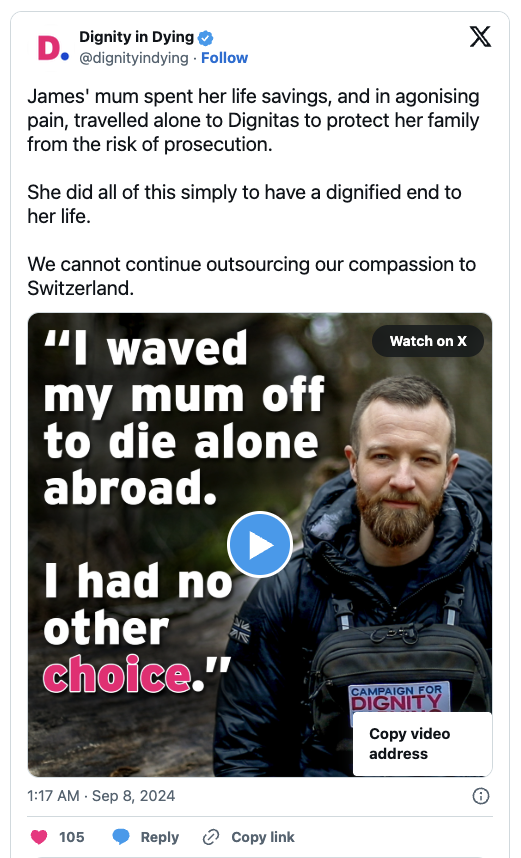
Even people who are terminally ill need to travel to countries to obtain assisted suicide, as the vast majority of countries don’t allow any form of assisted suicide. This story is from the website Dignity in Dying, a website that promotes legislative changes that make assisted suicide legal in the UK.
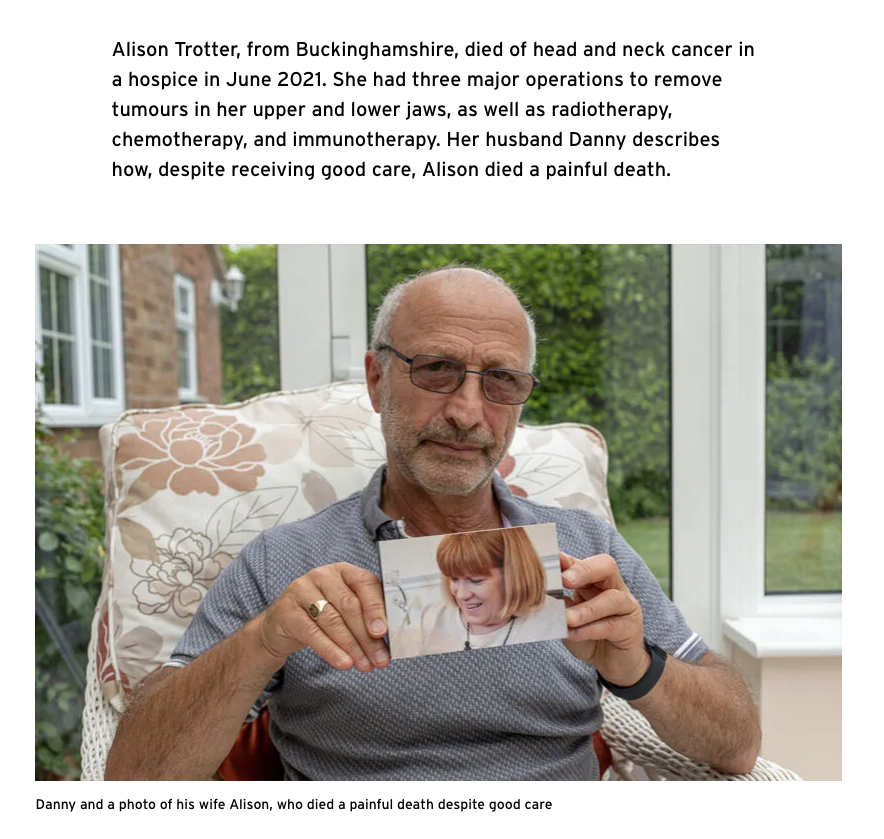
Dying a Painful Death
Traveling to Australia from the UK for Assisted Suicide
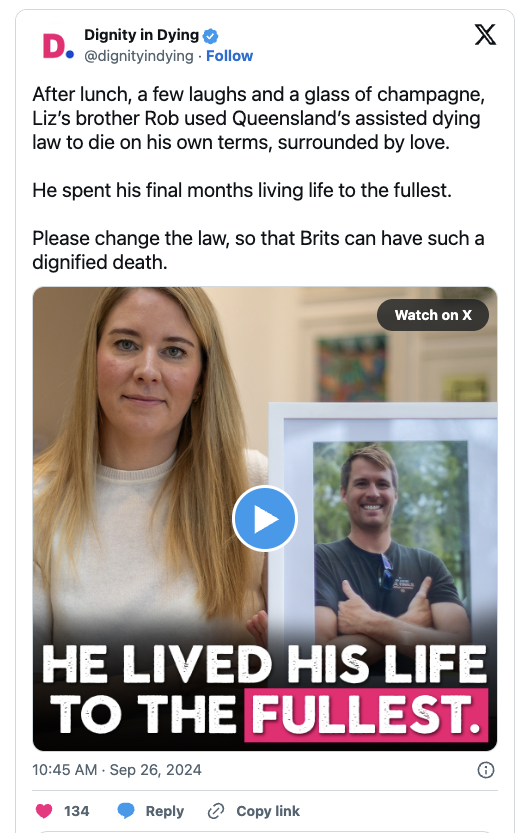
This was again for a person who already had a terminal health condition. Even with a terminal condition, Rob could not obtain assisted suicide in the UK.
Do it Yourself Suicide?
When one thinks of doing it oneself, it turns out to be more complicated than it initially appears, as the following quote from this article explains.
The most common lethal drugs used by clinicians to assist suicide were high doses of barbiturates, frequently either pentobarbital or secobarbital. Very high-dose barbiturates have long been a popular method for assisted suicide and are recommended both by the Netherland’s Guidelines for the Practice of Euthanasia and Physician-Assisted Suicide and the Canadian Association of MAiD Assessors and Providers’ oral MAiD medication protocol
Evidence from jurisdictions where assisted suicide is legal reveals that some patients who ingest the prescribed lethal drugs experience distressing complications. The Canadian Association of MAiD Assessors and Providers acknowledges that patients who ingest assisted suicide drugs can experience burning, nausea, vomiting and regurgitation, especially if the patient is experiencing difficulty swallowing large volumes of liquid. Nausea, oesophagitis, gastritis, severe dehydration or pathology of the gastrointestinal tract likely interfere with drug absorption. This is reflected in the data published by US states such as Oregon, where annual complication rates have been as high as 14.8% and patients are reported to have experienced difficulty swallowing or drug regurgitation, seizures and have even regained consciousness after ingesting the ‘lethal’ drugs.
There is also evidence that the drugs used for assisted suicide do not consistently bring about death quickly. Time to death after ingesting the lethal drugs seems highly unpredictable. Of cases with available data in Oregon since 2001, time from drug ingestion to death has ranged from 1 min (too short for the cause to have been oral drugs) to 108 h. Thirty-three percent of the total deaths with recorded data have taken over an hour, and 7.6% over 6 h.
In 2017, The Denver Post published an article about a man in Colorado who sought assisted suicide after being diagnosed with cancer. Although his wife thought he would die quickly and peacefully, after ingesting the lethal drugs he experienced distressing complications and took over 9 h to die5:
The unpredictable efficacy of assisted suicide drugs is acknowledged by the Royal Dutch Medical and Pharmaceutical Societies and the Canadian Association of MAiD Assessors and Providers, who both recommend that clinicians obtain consent from patients to convert to euthanasia prior to ingestion of the lethal drugs in case the patient takes too long to die.
Conclusion
Not everyone agrees with the dominant view that everyone should try to continue to live until the very end of their life. Many people, including me, prefer to live up to a certain point and then exit on one’s own terms. However, at present, I can’t find a country where this is actually legal. It is only really legal where one has a terminal health condition.